
Burundi Kayanza Coffee: Why the World’s Smallest Origins Punch Hardest
Burundi is one of the smallest and most densely populated countries in the world. It produces less than 1% of global coffee output. And yet specialty coffee buyers who know African origins know Burundi’s Kayanza region by name — the same way wine buyers know specific Burgundy appellations.
Small is not a limitation in specialty coffee. Small is precision. It is traceability. It is the ability to know, with certainty, which washing station processed your beans, which farmers delivered the cherries, and what the cup will taste like because of those specific decisions.
Kayanza is that level of precision, applied to one of East Africa’s most beautiful origins.
The geography of Burundian coffee
Burundi is landlocked in the African Great Lakes region, bordered by Rwanda to the north, Tanzania to the east and south, and the DRC to the west. It is small enough that you can drive across it in a few hours, but its altitude range is dramatic: the country rises from the shores of Lake Tanganyika in the west to highland plateaus exceeding 2,000 metres in the centre and north.
Coffee grows on those highlands. The altitude is ideal — above 1,500 metres in most specialty-producing regions, above 1,800 metres in the best of them. The volcanic-influenced soil is mineral-rich. The temperatures are cool enough to slow cherry maturation and build complexity.
Burundi’s coffee is almost entirely arabica, processed primarily through the washed method at centralised washing stations that serve dozens of smallholder farmers. Those washing stations are the defining feature of Burundian specialty coffee.
What makes Kayanza different
Kayanza Province sits in the north of Burundi, close to the Rwandan border. It is one of the country’s highest coffee-growing regions and produces what many specialty roasters consider Burundi’s finest lots.
The washing stations in Kayanza have invested in processing infrastructure and quality control at a level that is rare for an origin of this size. Cherries are sorted meticulously at delivery. Fermentation times are carefully managed. Drying on raised beds is monitored to ensure even moisture loss.
The result is a cup of extraordinary clarity and consistency. Burundian coffee from a well-managed Kayanza station is not variable from bag to bag. It expresses the terroir precisely, harvest after harvest, because the processing removes any variable that might obscure it.
Kayanza coffee tastes like it was made by someone who cared about every decision between the tree and your cup. Because it was.
What Kayanza coffee tastes like
The flavour profile of high-quality Kayanza arabica is a study in balance. There is a brightness — orange zest, a vivid citrus quality that is present but not aggressive. Beneath it, a dark chocolate body that builds through the cup. The two elements are in proportion: neither dominates. The finish is long, clean, and leaves a sweetness that lingers.
It is the kind of cup that people describe as elegant. Not showy. Not the wild complexity of Harrar or the bold spice of Cameroon. Something more composed. A coffee that you return to because it is never quite the same twice — because you are noticing different things as you drink it.
Compared to Rwandan coffee, which is its closest geographic neighbour and often draws similar flavour profiles, Kayanza arabica tends to have a slightly deeper chocolate body and less of the tea-like delicacy. It is complete.
The challenge Burundi faces
Burundi is one of the world’s poorest countries. Coffee farming is the primary income source for an enormous percentage of rural households. The quality the Kayanza farmers produce is exceptional. The economic conditions in which they produce it are not.
This is precisely why Living Wage Verified sourcing matters most in origins like Burundi. A farmer producing competition-grade specialty coffee while living below the poverty line is a systemic failure of the coffee market. The quality of the cup should reflect the quality of the supply chain in every direction — including toward the people who grew it.
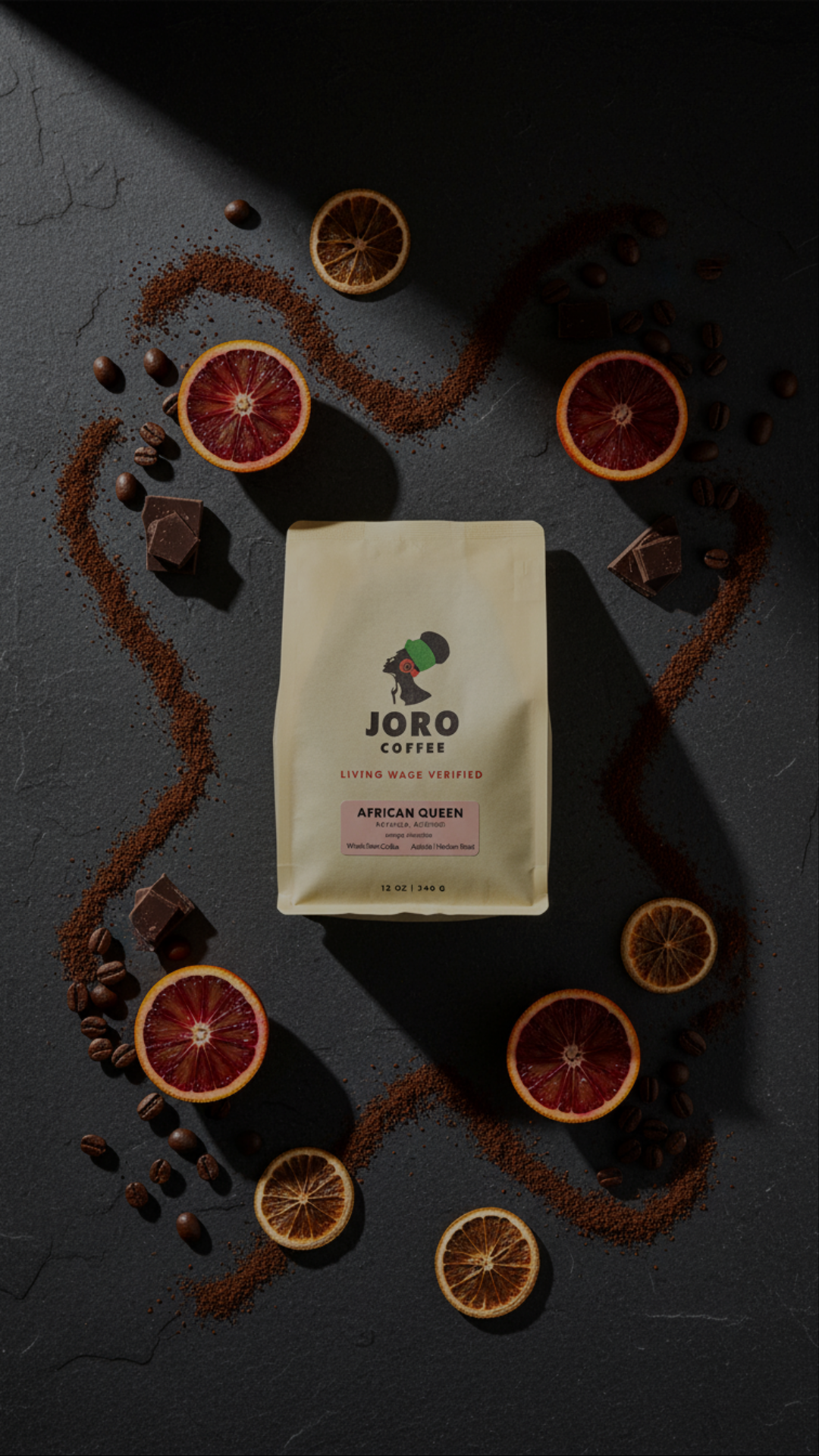
Joro’s African Queen, sourced from Kayanza, carries the Living Wage Verified standard as a non-negotiable baseline. Not because it makes a good story. Because it is the minimum that the quality of this coffee demands.
African Queen — Joro’s Burundi origin
The name African Queen is a tribute to a continent and an origin that have been treated as sources of raw material for too long. Kayanza’s arabica is not a raw material. It is a finished product. It is an expression of geography, farming knowledge, processing skill, and accumulated investment in quality. It deserves a name that reflects its standing.
Orange zest brightness on entry. Dark chocolate through the body. Long, clean finish with a lingering sweetness. Medium roast, whole bean. The kind of coffee you make for guests and watch them put down their phones.
How to brew African Queen
Pour-over (recommended): This is where Kayanza precision comes through most clearly. Medium-fine grind, 93°C water, slow even pour. The clarity of filter brewing showcases the orange notes distinctly against the chocolate body. Let it cool two or three minutes before drinking.
Espresso: African Queen is one of Joro’s best espresso origins. The chocolate body produces excellent crema. The orange note adds a brightness that cuts through milk beautifully if you are making a flat white or latte. Start at 90°C and adjust.
Cold brew: The chocolate notes develop beautifully in cold extraction. 16 hours in the refrigerator, coarse grind, 1:15 ratio. The orange quality becomes more pronounced cold, producing a cold brew that does not need any sweetening.