
How to Brew Single Origin African Coffee at Home (Every Method)
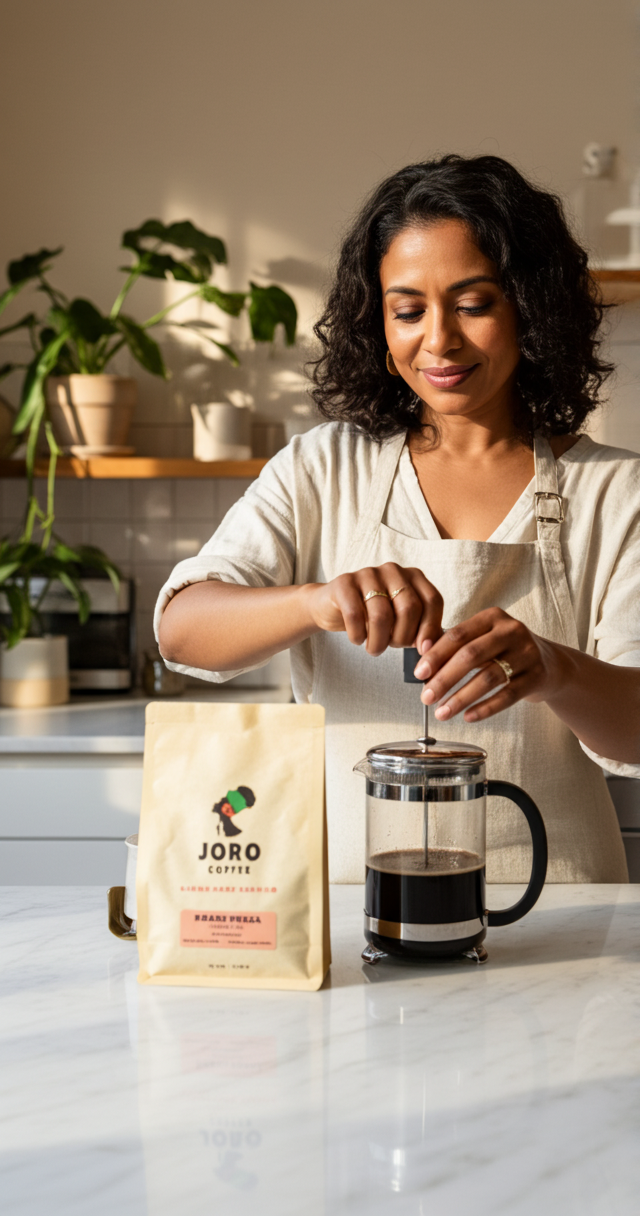
Single origin African coffee rewards attention. The flavours that make Ethiopian, Ugandan, and Congolese arabica remarkable — the bergamot, the berry brightness, the chocolate depth — are not gifts from the roaster. They come from the bean. Your job as the brewer is to get out of their way.
This guide covers every common home brewing method, explains what each one does to the coffee, and tells you which Joro origins perform best in each. It will take you ten minutes to read and will change how you approach your morning cup.
Before you brew: the fundamentals
Grind fresh. This is the single most important thing you can do. Ground coffee loses its volatile aromatics — the floral, citrus, and fruity notes — within minutes of grinding. Whole bean coffee, ground immediately before brewing, is a different product from pre-ground. If you don’t have a burr grinder, this is the upgrade that will have the largest impact on your cup.
Use filtered water. Coffee is 98% water. Chlorinated tap water suppresses flavour. If your tap water tastes like nothing, it’s fine. If it tastes like anything, filter it.
Weigh your coffee. The standard ratio for most methods is 1:15 to 1:17 (coffee to water by weight). 15g of coffee to 250ml of water is a useful starting point. A kitchen scale costs less than a bag of specialty coffee and makes the difference between a repeatable great cup and a guessing game.
Taste it black first. Single origin African coffee is designed to be tasted without milk. The flavour notes are present in the coffee itself. Add milk if you prefer it, but taste it black first at least once. You will notice things you did not know were there.
Pour-over — best for Ethiopian and Ugandan origins
Pour-over — using a V60, Chemex, or similar filter dripper — produces the clearest, most defined expression of a single origin’s flavour. The paper filter removes oils and fine particles, producing a clean cup where individual notes come through distinctly.
This is the method that best showcases the floral and citrus qualities of Ethiopian arabica and the berry brightness of Ugandan high-altitude beans.
Recipe (V60): 20g coffee, medium-fine grind. 300ml water at 92–93°C. Pour 60ml to bloom for 30 seconds. Then pour slowly in 3 stages over 2.5 to 3 minutes total. The slower and more even the pour, the cleaner the result.
Best Joro origins for pour-over: Ethio-Jazz (Ethiopia), Ngoma (Uganda), African Queen (Burundi)
Cold brew — best for chocolate and citrus origins
Cold brew extracts coffee slowly over 12 to 18 hours at room temperature or in the refrigerator. The absence of heat changes the extraction chemistry, producing a coffee that is lower in acidity, higher in body, and naturally sweeter than hot brewed coffee.
Origins with chocolate, caramel, and citrus notes — where the bitterness that heat can introduce would otherwise interfere — perform exceptionally well as cold brew. The slow extraction amplifies sweetness and body while preserving brightness.
Recipe: 75g coarsely ground coffee per 1 litre of cold filtered water. Combine in a jar or cold brew maker. Steep 16 to 18 hours in the refrigerator. Strain through a paper filter or fine mesh. Serve over ice, neat or diluted 1:1 with water.
Best Joro origins for cold brew: Kwasa Kwasa (Congo), Amapiano (South Africa), Ngoma (Uganda)
Amapiano cold brew is one of the most compelling things you can make with a bag of Joro coffee. The dark chocolate and caramel notes in slow extraction are extraordinary.
French press — best for full-bodied West and Central African origins
French press uses full immersion brewing — the coffee steeps in water rather than water passing through it. The metal mesh plunger does not filter as finely as paper, so more oils and fine particles remain in the cup. The result is a heavier, fuller-bodied brew.
This method suits origins with bold, spiced, or full-bodied profiles. It can over-extract origins with high natural acidity or delicate floral notes, so it is not the best method for Ethiopian Harrar or Burundian Kayanza. But for Cameroon’s Afrobeats or the DRC’s Kwasa Kwasa, French press develops the body and spice beautifully.
Recipe: 30g coffee per 500ml water. Coarse grind. Water at 92°C. Steep 4 minutes. Press slowly. Pour immediately to avoid over-extraction.
Best Joro origins for French press: Afrobeats (Cameroon), Kwasa Kwasa (Congo)
Aeropress — the most versatile method
The Aeropress is a pressurised immersion brewer that produces a concentrated coffee similar to espresso but without an espresso machine. It is forgiving, fast, and adaptable.
The Aeropress suits almost any single origin. Its short brew time — typically 1 to 2 minutes — and adjustable variables (grind, temperature, steep time, inverted vs standard) mean you can tune it toward any flavour profile you want. For African origins with high natural complexity, this control is valuable.
Recipe: 17g coffee, medium-fine grind. 200ml water at 88–90°C (slightly lower temperature than pour-over, to manage acidity). 1.5 to 2 minute steep. Gentle press over 30 seconds. Dilute to taste.
Best Joro origins for Aeropress: All six. Adjust temperature down for Ethiopian and Burundian origins, slightly warmer for Ugandan and Cameroonian.
Espresso — an advanced application
Single origin African espresso is one of the most exciting areas of specialty coffee. The pressure extraction under an espresso machine produces a concentrated version of all the flavour compounds in the bean. With African origins, the results can be extraordinary — but they require careful dialling.
African arabicas tend toward higher natural acidity than espresso blends, which can become sour under-extracted or sharp over-extracted. Start with slightly longer extraction times and slightly lower temperatures than you would use for a Brazilian or Colombian blend.
Starting point: 18g in, 36g out (1:2 ratio), 28 to 30 seconds, water at 90°C. Adjust from there based on taste.
Best Joro origins for espresso: African Queen (Burundi), Ngoma (Uganda), Amapiano (South Africa)