
DRC Congo Coffee Beans: Everything You Need to Know Before You Buy
The Democratic Republic of Congo is not the first place most people think of when they think about specialty coffee. It should be.
In the volcanic highlands of eastern DRC, where the land rises steeply above Lake Kivu at altitudes exceeding 1,500 metres, arabica coffee grows in conditions that rival the finest producing regions anywhere in the world. The soil is rich with minerals from volcanic activity. The altitude slows cherry maturation and builds complexity. The climate is ideal.
And yet most people have never tasted DRC coffee. There are reasons for that. They make the coffee more meaningful when you do find it.
Why DRC coffee is so rare
The eastern DRC has faced decades of conflict and instability. Infrastructure is limited. Roads in the coffee-growing highlands are in many places impassable. The supply chain from farm to export is more complex, more expensive, and more uncertain than in neighbouring Rwanda, Uganda, or Burundi.
The result is that DRC coffee rarely makes it to specialty markets. Most of what leaves the country enters the commodity stream — blended, untraced, undervalued. The farmers who grew it receive commodity prices for beans that, with proper sourcing relationships, could command specialty premiums.
The brands and importers willing to put in the work to source from the DRC — to build direct relationships, navigate the logistics, and pay premiums that reach the farmers — are few. The coffee they bring back is extraordinary.
What DRC coffee tastes like
Eastern DRC arabica, particularly from the Lake Kivu region, has a flavour profile defined by the volcanic terroir and high altitude.
Expect brightness. Not the sharp, wine-like intensity of Kenyan coffee, but a clear, vivid citrus quality — sometimes described as blood orange or lemon zest — that appears on the first sip. As the cup develops, the brightness gives way to a rich chocolate body. The finish is long and clean.
The texture is smooth and full. Cold brew is particularly suited to DRC arabica — the slow extraction develops the chocolate notes beautifully while preserving the citrus brightness. Pour-over reveals more of the terroir’s complexity.
DRC coffee tastes like it comes from somewhere that took work to reach. There is depth in the cup that reflects the difficulty of getting it here.
The Lake Kivu growing region
Lake Kivu sits on the border between the DRC and Rwanda in the African Great Lakes region. The surrounding highlands — North Kivu, South Kivu, and parts of Ituri province — produce arabica at elevations between 1,400 and 2,000 metres.
The volcanic soil is exceptionally mineral-rich. The altitude creates the wide day-night temperature variation that forces coffee cherries to mature slowly and develop complex sugar profiles. The rainfall pattern is reliable and well-distributed across the growing season.
These are the conditions that produce competition-grade coffee. With the infrastructure of Rwanda or the recognition of Ethiopia, this region would be celebrated globally. The access challenges mean it remains one of the world’s best-kept coffee secrets.
Kwasa Kwasa — Joro’s Congo origin
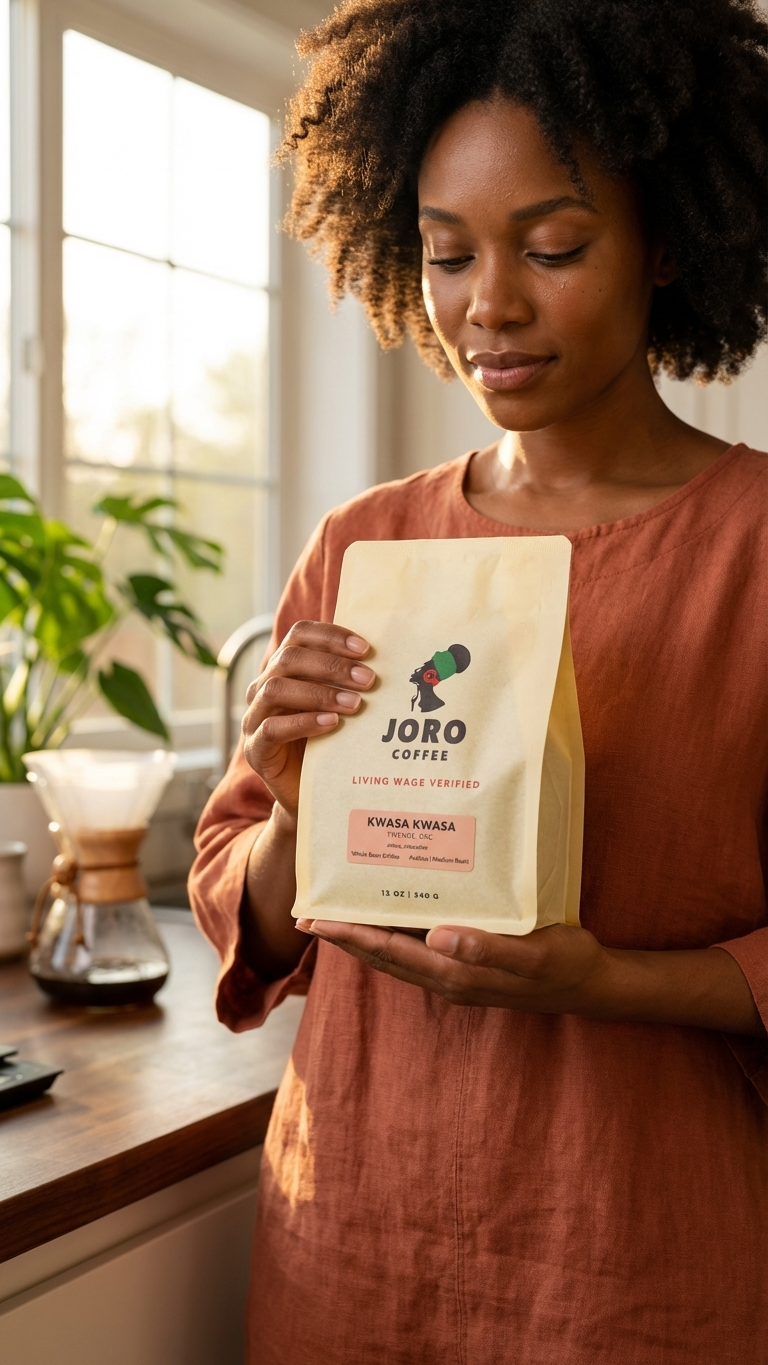
Kwasa Kwasa is Joro’s DRC coffee, sourced from Twende in the eastern highlands. It’s named for the iconic rhythm born in Kinshasa in the 1980s that swept across Central Africa and became one of the continent’s defining musical exports — joyful, rhythmic, unmistakably Congolese.
The flavour profile matches the name’s energy. Bright citrus on the nose and first sip. A rich dark chocolate body that builds through the cup. A long, clean finish with mineral depth from the volcanic soil. Medium roast to preserve the origin’s natural character.
Kwasa Kwasa is Living Wage Verified. The farmers of the eastern DRC, working in some of the world’s most challenging conditions, were paid a verified fair wage for this harvest. That is not a given in this origin. Joro made it a requirement.
Who should try DRC coffee
If you already drink Ethiopian or Kenyan specialty coffee and want to explore what else Africa produces, the DRC is the logical next destination. The flavour profile shares the brightness of East African origins but adds a chocolate depth and mineral complexity that is distinctly its own.
Cold brew drinkers in particular will find Kwasa Kwasa remarkable — the chocolate and citrus notes play exceptionally well in cold extraction.
And if you’ve never bought single-origin African coffee before, Kwasa Kwasa is an honest introduction to what the continent produces when the supply chain treats its origins with the care they deserve.