
Ethiopian Coffee Flavor Profile: What Makes It Taste Like That?
If you've ever brewed a cup of Ethiopian coffee and thought you were tasting blueberry, jasmine, or even bergamot — you weren't imagining it. Ethiopian coffee is famous for having some of the most complex, distinctive flavor profiles in the world of specialty coffee. And it's not magic: it's geography, genetics, and centuries of tradition.
Here's what's behind the taste — and why Harrar, Ethiopia in particular produces a cup unlike anything else.
Ethiopia: Where Coffee Was Born
Coffee as we know it originated in Ethiopia. The plant, Coffea arabica, grew wild in the highland forests of the Kaffa region before spreading to Yemen and then the rest of the world. This means Ethiopian coffees have a genetic diversity and terroir depth that no other origin can match — they've had thousands of years to develop complexity.
Today, Ethiopia is the world's fifth-largest coffee producer, and its regional variety is extraordinary. Yirgacheffe is known for delicate floral and tea-like qualities. Sidama brings berry-bright acidity. And Harrar — where Joro's Ethio-Jazz is grown — produces something wilder and more intense.
The Harrar Difference
Harrar sits at 1,500–2,100 meters elevation in Eastern Ethiopia. The dry, high-altitude climate and ancient heirloom varieties produce a coffee that's bold and wine-like — with natural processing (sun-drying the whole coffee cherry) creating deep fruit complexity in the bean.
What you taste in a Harrar coffee: bright citrus up front, a bergamot quality in the mid-palate, and a long finish with hints of dark fruit. It's coffee that rewards slow brewing and attention.
Joro's Ethio-Jazz: Harrar Specialty Beans
Our Ethio-Jazz is sourced directly from Harrar and carries everything that makes the region exceptional: citrus brightness, bergamot, and a clean, transparent finish. We roast it medium to preserve the origin character without any of the roasty bitterness that would cover up its best qualities.
It's the bean for people who want to taste where their coffee comes from — not just caffeine in a cup.
How to Brew Ethiopian Coffee to Get the Best Flavor
Ethiopian coffees are best brewed with methods that let their complexity shine. Our recommendations:
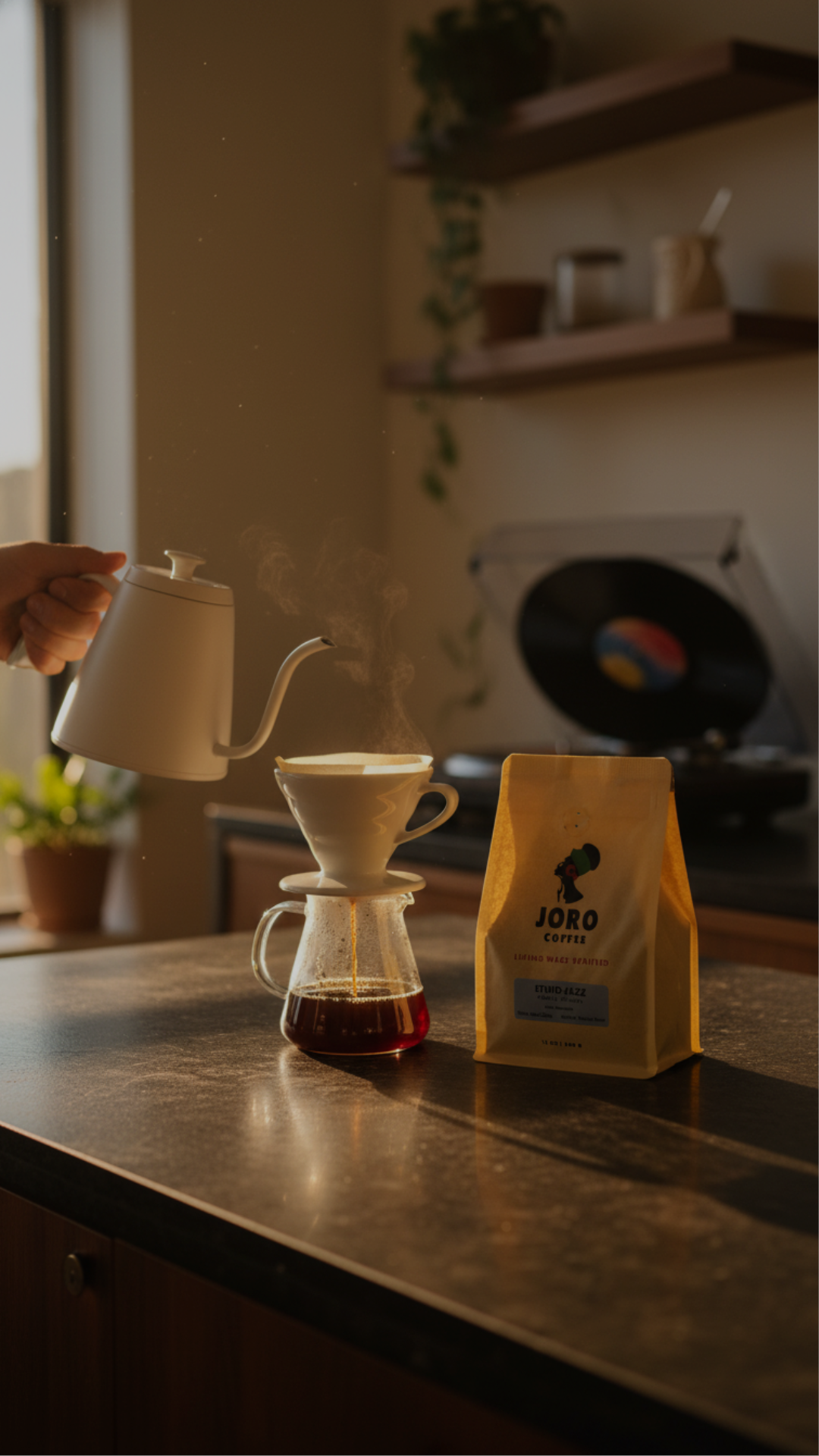
• Pour over (V60 or Chemex) — the slow, controlled pour extracts the citrus and floral notes cleanly
• Aeropress — produces a concentrated, wine-like cup that shows Harrar's depth
• Avoid French press — the full immersion can muddy the clarity of the flavor
Use water around 92–94°C (just off the boil), a medium-fine grind, and a 1:15 coffee-to-water ratio as your starting point.
Why Living Wage Matters in Ethiopian Coffee
Ethiopia's coffee farmers are among the most skilled in the world — and historically among the least compensated. At Joro, every bag is Living Wage Verified. That means the farmers who grew Ethio-Jazz were paid a wage that covers basic needs and more. It's a standard we hold to across every origin we source from, because exceptional coffee should create exceptional lives across the supply chain.