
Harrar Ethiopia Coffee: The Wild-Grown Origin Behind Ethio-Jazz
Most people who drink Ethiopian coffee know Yirgacheffe. Some know Sidamo. Very few have tried Harrar — and that is a gap worth closing.
Harrar sits in Ethiopia’s eastern highlands, far from the fertile, well-watered growing regions that have built the country’s global coffee reputation. It is drier. More remote. The coffee trees grow semi-wild, dispersed among the farmland rather than planted in organised rows. And it produces one of the most distinctive cups on the planet.
Where Harrar is and why it matters
Ethiopia’s main specialty coffee regions cluster in the south and west: Yirgacheffe in the Gedeo Zone, Sidamo in the Sidama region, Jimma in the west. These are the regions that built Ethiopia’s reputation for floral, tea-like, elegantly bright arabica.
Harrar is in the east, in the Harari and Oromia regions. The altitude is lower than Yirgacheffe — typically 1,400 to 2,000 metres rather than 2,000 plus. The climate is drier and warmer. The coffee trees are old, often heirloom varieties that have been growing and self-seeding in the same land for generations.
The processing is almost always natural. Whole cherries are dried in the sun on raised beds, sometimes for weeks. The extended contact between the bean and the drying fruit skin allows flavour compounds to transfer — creating the wine-like, berry, and dried fruit qualities that define Harrar’s cup profile.
What Harrar coffee actually tastes like
If you have spent your Ethiopian coffee experience drinking washed Yirgacheffe — jasmine, lemon, tea-light body — Harrar will surprise you.
The natural processing produces a heavier, more complex cup. There is still brightness, but it reads as citrus — orange peel, bergamot — rather than lemon. The body is fuller. There is a wine-like quality on the mid-palate, a fermented fruit richness that develops as the cup cools. The finish is long and lingers with dried fruit and chocolate.
It is one of the few coffees that changes significantly as it cools. A Harrar coffee at drinking temperature and a Harrar coffee ten minutes later are almost different experiences. Let it cool slightly. The bergamot opens up.
Harrar tastes wild. Because it is. These trees have been growing without human management for generations. The cup reflects that history.
The history of Harrar coffee
Harrar is one of the oldest documented coffee-trading cities in the world. The ancient walled city of Harar — a UNESCO World Heritage Site — has been a centre of coffee commerce for centuries. Mocha coffee, named for the Yemeni port through which Ethiopian coffee was historically exported, traces its roots to Harrar’s trade routes.
Coffee was not just cultivated here. It grew wild. The distinction matters because wild-growing or semi-wild arabica trees carry far more genetic diversity than plantation-grown coffee. That diversity is part of what produces the complexity in the cup.
Ethiopian law protects the country’s coffee genetic heritage, restricting the export of living plant material. The result is that the heirloom varieties growing in Harrar exist nowhere else. When you drink a Harrar coffee, you are drinking something that cannot be replicated outside Ethiopia.
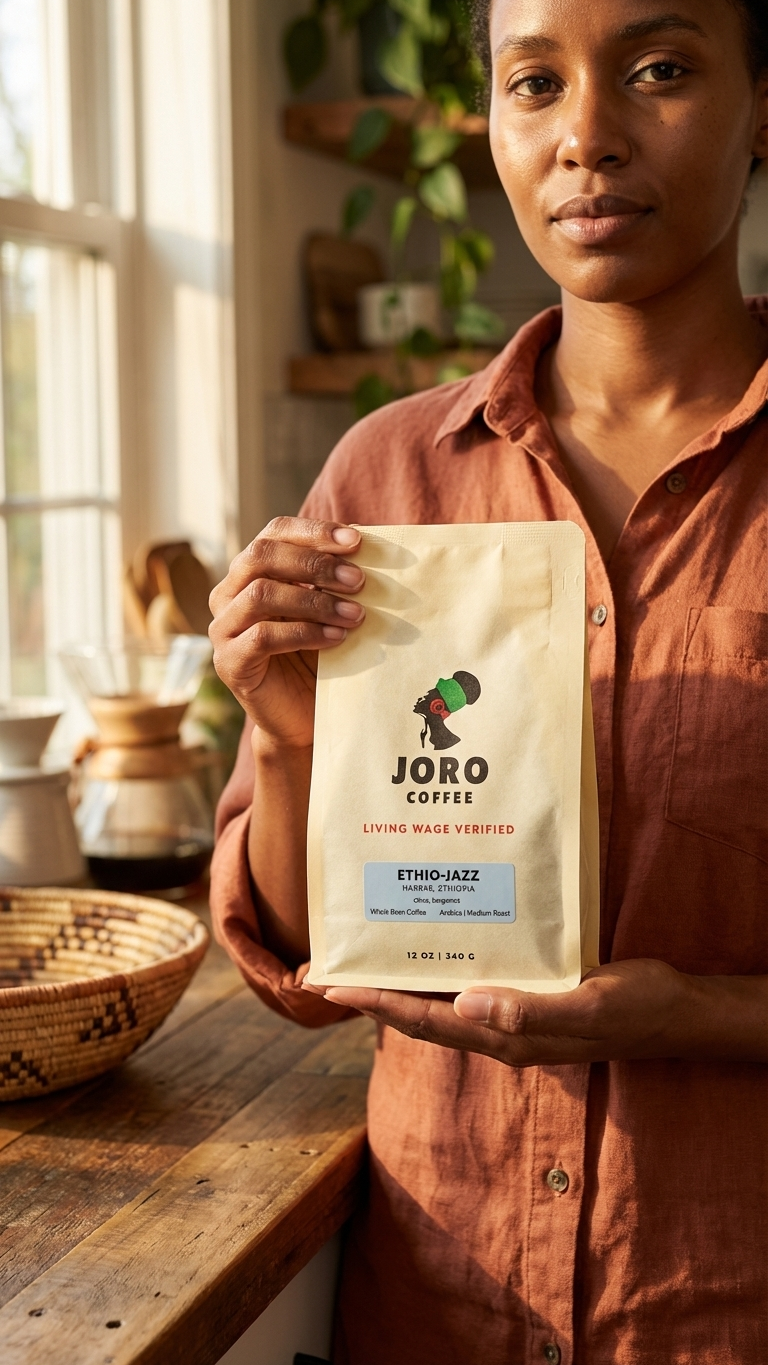
Ethio-Jazz — Joro’s Harrar origin
Joro’s Ethiopian coffee is called Ethio-Jazz — a name that carries the same energy as the music it references. Ethiopian jazz, which flourished in Addis Ababa in the 1960s and 1970s under artists like Mulatu Astatke, blended African rhythms with global influences to create something entirely its own. Harrar coffee does the same: ancient genetic heritage meeting the complexity of a distinctive terroir.
Ethio-Jazz opens with bright citrus on the nose. The first sip brings a bergamot quality that is immediately recognisable — floral, slightly aromatic, like the peel of a bergamot orange rather than the fruit itself. The body builds through the mid-palate. The finish is long and clean.
It is the coffee that makes people put their phone down and pay attention.
Living Wage Verified. The farmers of Harrar’s highlands — smallholders working semi-wild groves that require intimate knowledge and careful hand-harvesting — were paid a verified fair wage for this harvest.
How to brew Harrar coffee
Pour-over (recommended): Use a V60 or Chemex with a medium-fine grind. Water at 93°C. A slow, even spiral pour. Let the coffee bloom for 30 seconds before continuing. This method preserves the floral and citrus notes that define Harrar. Drink without milk first to taste the bergamot.
Aeropress: Medium grind, 200ml water at 88°C, 2 minutes steep, gentle press. Produces a concentrated, rich cup that amplifies the wine-like qualities.
Avoid French press: The full immersion method can over-extract Harrar’s natural tannins from the natural processing, producing a muddier cup. Filter methods suit the origin better.